
Selank 5mg - Premium Research Peptide | PeptideHubs
What is Selank? Overview In the research fields of neuro-mood regulation, cognitive enhancement, and neuroimmune balance, a synthetic heptapeptide derived from endogenous immune peptide fragments, possessing both potent anti-anxiety and mild nootropic properties, is becoming a research hotspot—Selank. Developed by the Institute of Molecular Genetics of the Russian Academy of Sciences, it is a structurally optimized analog of the endogenous tuftsin prophagocytic peptide. Its core advantage lies in its precise targeting of the central nervous system and peripheral immune system, achieving four effects: anti-anxiety, cognitive enhancement, neuroprotection, and immune balance. Furthermore, it lacks the sedative and addictive side effects of traditional anti-anxiety drugs, making it a core tool for research in neuroscience, mood disorders, cognitive decline, and neuroimmunology. It does not achieve its anti-anxiety effect by strongly suppressing the central nervous system. Instead, it gently improves mood and enhances cognitive function by regulating the GABAergic system, upregulating neurotrophic factors, and balancing neurotransmitter secretion. This avoids the limitations of traditional benzodiazepines, such as sedation, drowsiness, and addiction, acting as a "neuromotor and immune balance regulator." It plays an irreplaceable role in research related to anxiety disorders, cognitive decline, brain injury repair, and neuroimmune disorders.
The unique advantage of this peptide lies in its perfect balance between "dual neuro-immune targeting" and "safety and non-addictiveness." Compared to traditional anti-anxiety drugs (such as diazepam), which are prone to sedation, cognitive impairment, and physiological dependence, Selank, as a small-molecule linear heptapeptide, can efficiently penetrate the blood-brain barrier via intranasal administration or subcutaneous injection. It preferentially accumulates in core brain regions regulating emotion and cognition, such as the hippocampus, amygdala, and prefrontal cortex, while simultaneously targeting peripheral immune cells to achieve synergistic regulation of the central nervous system and peripheral immunity. Furthermore, as a structurally optimized product of endogenous tuftsin, it is non-immunogenic, has excellent biocompatibility, and does not cause physiological addiction with long-term use. It does not affect cognitive alertness; on the contrary, it can gently improve attention and memory. Researchers have described it as a "dual-function key that precisely regulates emotion and immunity," acting only on core pathways of neuroemotional and immune balance without interfering with normal central nervous system alertness. Traditional anti-anxiety drugs, on the other hand, act like "central nervous system depressants," which, while quickly relieving anxiety, easily lead to sedation, drowsiness, and disrupt cognitive and physiological balance.
As a classic research peptide in the fields of neuroemotion and neuroimmunology, Selank's research has progressed from cell experiments and animal models to clinical applications. Its effects on anxiety reduction, cognitive enhancement, and neuroprotection have been fully validated in Russian clinical studies. It was approved for marketing in Russia in 2009 and included in the local list of commonly used anti-anxiety drugs. It is widely used in the clinical treatment and related research of diseases such as generalized anxiety disorder, adjustment disorder, and cognitive decline. It serves as an important bridge connecting basic neuropeptide research and clinical applications. Currently, it has not yet received FDA or EMA approval in Western countries and is mainly used as a research peptide tool.
Selank peptide structure: Amino acid sequence: H-Thr-Lys-Pro-Arg-Pro-Gly-Pro-OH (L-threonine-L-lysine-L-proline-L-arginine-L-proline-L-glycine-L-proline), abbreviation TKPRPGP, CAS number 129954-34-3, molecular formula C₃₃H₅₇N₁₁O₉, molecular weight approximately 751.9 Da. It is a linear synthetic heptapeptide, a structurally optimized analog of the endogenous prophagocytic peptide (Tuftsin), without artificial terminal modifications (no N-terminal acetylation, no C-terminal amidation). It is formed by seven natural L-type amino acids linked by peptide bonds, retaining the Thr-Lys-Pro-Arg active motif of Tuftsin at the core, and extending the Pro-Gly-Pro (PGP) structure at the C-terminus to enhance stability and central nervous system activity.
Its precise and highly functional structural design, with the selection and linkage of each amino acid providing a solid foundation for its central targeting, neuroactive activity, immunomodulatory capabilities, and safety, highlights and advantages of the core structure are as follows: • Linear heptapeptide small molecule backbone: Formed by seven natural L-type amino acids, its molecular weight is only 751.9 Da, far below the blood-brain barrier penetration threshold (1000 Da), giving it excellent blood-brain barrier penetration ability. Effective concentrations can be detected in cerebrospinal fluid within 5 minutes after nasal spray administration, reaching peak central concentrations within 20 minutes. It can also rapidly enter the brain via the naso-brain direct transport pathway (olfactory and trigeminal nerve pathways), making it one of the very few neuroactive peptides that can efficiently target the central nervous system without injection. This characteristic allows it to act rapidly on central target sites, exerting anti-anxiety and cognitive-enhancing effects.
• Optimized Tuftsin Fragment Structure: The core active motif of Tuftsin (Thr-Lys-Pro-Arg) is precisely preserved, while the C-terminal extension of the Pro-Gly-Pro (PGP) structure is optimized to completely eliminate the pro-inflammatory activity of natural Tuftsin, retaining only its beneficial immune-regulating effects. Simultaneously, the peptide chain's resistance to enzymatic degradation and central nervous system activity are significantly enhanced. This optimization is the core foundation for achieving "dual neuro-immune regulation, safe and without side effects."
• Anti-enzymatic Structure Design: The rigid Pro-Gly-Pro diproline structure at the C-terminus forms strong steric hindrance, shielding the cleavage sites of carboxypeptidase and aminopeptidase in vivo. This results in a half-life more than 25 times longer than that of natural Tuftsin—natural Tuftsin has a plasma half-life of only 2 minutes, while Selank has a plasma half-life of up to 4 hours, with an even longer retention time in cerebrospinal fluid. This effectively prolongs its central nervous system action and immune-regulating effects, addressing the pain points of natural peptides being easily degraded by enzymes and having a short duration of action.
• Endogenous Homology and Charge Advantages: The core active motif is highly homologous to human natural Tuftsin, exhibiting no immunogenicity, not triggering antibody reactions, excellent biocompatibility, and good long-term safety. The peptide chain contains two basic amino acids, lysine (Lys) and arginine (Arg), with no acidic side chains. Its isoelectric point is approximately 11.5-12, exhibiting strong cationicity in a neutral pH environment, facilitating cell membrane binding and enhancing bioavailability, while also strengthening its binding affinity to GABA receptors.
This ingenious structural design makes Selank a highly efficient, mild, dual-targeting neuro-immunomodulatory peptide. It can precisely penetrate the blood-brain barrier to act on the central nervous system, regulating mood and cognition, while also targeting peripheral immune cells to balance immune function. Furthermore, it possesses good resistance to enzymatic degradation and biocompatibility. When it binds to GABA receptors in central neurons and interacts with peripheral immune cells, it can rapidly initiate anti-anxiety, cognitive-enhancing, and immune-balanced processes. Researchers, in elucidating its mechanism of action, are amazed by the "dual-target synergistic, mild, and highly effective" molecular design of this synthetic peptide.
To date, Selank's core research has covered cell experiments, animal models, and clinical applications in Russia. Its effects on anti-anxiety, cognitive enhancement, neuroprotection, and immune regulation have been fully validated. It is widely used in research and clinical treatment of anxiety disorders, cognitive decline, brain injury, and neuroimmune disorders. Although it has not yet received FDA or EMA approval for clinical use in Western countries, it has become one of the most valuable research peptides in the intersection of neuroscience and immunology, providing an important tool for mechanistic research and novel drug development in central nervous system diseases and immune-related diseases.
Selank Peptide and Anxiety Control and Mood Regulation: The most core and extensive research value of Selank lies in its potent anxiolytic and mood-regulating effects. It exerts a mild and long-lasting regulatory effect on various mood disorders (such as generalized anxiety disorder, panic attacks, and adjustment disorder). Through a multi-target synergistic mechanism, it improves negative emotions such as anxiety, fear, irritability, and depression, without sedative or drowsy side effects, providing an important tool for research related to mood disorders. In cell experiments, animal models, and Russian clinical studies, its anxiolytic effect has shown significant advantages, with efficacy comparable to traditional anxiolytic drugs and better tolerability.
Its core anti-anxiety and mood regulation mechanisms are clear and well-defined, with multiple targets working synergistically:
• Positive allosteric regulation of the GABAergic system: As a positive allosteric regulator of the GABA-A receptor, it does not directly bind to the main binding site of GABA, but rather to a unique site on the receptor complex, enhancing the affinity of GABA for the receptor, potentiating the inhibitory neurotransmitter effect of GABA, reducing the excitability of central neurons, thereby alleviating negative emotions such as anxiety and fear. This mechanism is similar to that of benzodiazepines, but is more specific and avoids side effects such as sedation, drowsiness, and cognitive impairment.
• Balances neurotransmitter secretion: Precisely regulates the synthesis, release, and metabolism of multiple neurotransmitters in the central nervous system, promotes serotonin metabolism, increases central serotonin levels, and improves depressive and irritable moods; regulates the dopaminergic system, maintains dopamine balance, and avoids excessive dopamine secretion leading to heightened anxiety; simultaneously increases dopamine levels in the prefrontal cortex, improving attention and emotional stability; furthermore, it inhibits enkephalin-degrading enzyme activity, prolonging the duration of action of endogenous enkephalin and helping to alleviate emotional stress.
• Inhibits stress response and regulates the HPA axis: Significantly reduces stress-induced negative emotional tension, stimulates adaptive behavior, and regulates the function of the hypothalamus-pituitary-adrenal (HPA) axis, normalizes stress-induced corticosterone release, and avoids excessive activation of the HPA axis leading to increased anxiety and depression, making it suitable for research on stress-related mood disorders.
• Clinically validated anti-anxiety efficacy: In a randomized, double-blind, placebo-controlled trial involving 60 patients with generalized anxiety disorder (GAD), intranasal administration of Selank (400 μg, three times daily for 14 days) significantly reduced Hamilton Anxiety Rating Scale (HAM-A) scores. The anti-anxiety effect was noticeable on day 7 and peaked on day 14, with no sedation or cognitive impairment side effects. Its efficacy was comparable to benzodiazepines, but with better tolerability. Another non-inferiority trial (62 GAD patients) also confirmed that Selank's anti-anxiety efficacy was non-inferior to traditional anti-anxiety medications, with no risk of dependence or addiction.
Studies have demonstrated that Selank can significantly exert its anti-anxiety effect at concentrations of 0.1-1.0 μM. Its potent, mild, and non-sedative characteristics make it an ideal research tool in the fields of mood disorders and stress responses, especially suitable for research on long-term anxiety models and emotion regulation mechanisms.
Selank Peptide and Cognitive Regulation and Nootropic Effects
Beyond its anti-anxiety properties, Selank possesses significant cognitive regulation and nootropic effects. Its effects stem from the upregulation of neurotrophic factors and the optimization of the neurotransmitter system, improving learning and memory, enhancing attention, increasing information processing efficiency, and alleviating cognitive fatigue. It provides an important tool for research on cognitive decline and attention deficits, and is particularly suitable for cognitive regulation research under stress.
Its core cognitive regulation and nootropic mechanisms and manifestations:
• Upregulation of neurotrophic factor expression: It can rapidly increase the expression of brain-derived neurotrophic factor (BDNF) in the hippocampus, promoting dendritic spine formation, synapse formation, and synaptic plasticity in hippocampal neurons, enhancing the long-term potentiation (LTP) effect—the molecular basis of learning and memory. Simultaneously, it promotes the proliferation and differentiation of neural stem cells, improves neuronal function, thereby enhancing learning, memory, and information retrieval abilities. Its cognitive-improving effects have been preliminarily observed in a transgenic mouse model of Alzheimer's disease.
• Optimizes cognitive function and enhances attention: By regulating the cholinergic system, it increases acetylcholine levels and inhibits acetylcholinesterase activity, improving cognitive decline-related issues such as memory loss and poor concentration. Simultaneously, its lack of sedative side effects allows it to maintain or even enhance cognitive alertness while improving mood, alleviating mental fatigue from monotonous work and high-pressure environments, and enhancing alertness and work efficiency. It is suitable for research on cognitive endurance in extreme environments.
• Dose-dependent cognitive regulation: Low doses (0.1-0.3 mg/kg) significantly enhance cognitive function, improving memory and attention; high doses (>1.0 mg/kg) may cause mild cognitive impairment, suggesting a narrow therapeutic window. This characteristic provides important reference for precise dose control in research and makes it more suitable for studying the mechanisms of precise cognitive regulation.
• Synergistic nootropic effect: When used in combination with nootropic peptides such as Semax, it produces a synergistic effect, further enhancing cognitive function, especially in learning, memory, and attention regulation, with more significant effects. It is suitable for research on the synergistic nootropic effects of compound peptides.
Furthermore, long-term use of Selank does not induce cognitive tolerance; instead, it gradually improves cognitive function by continuously upregulating BDNF expression. This characteristic makes it suitable for scientific observation scenarios in long-term cognitive decline models.
Selank Peptide and Neuroprotection, Anti-inflammatory and Antioxidant Properties
Selank is an important molecule connecting neuro-emotional regulation with neuroprotection, anti-inflammatory and antioxidant effects. Its neuroprotective effect stems not only from direct protection of neurons but also from inhibiting central nervous system inflammation, scavenging free radicals, reducing neuronal damage caused by inflammation and oxidative stress, and regulating neuroimmune balance. This provides new insights for research on central nervous system injury and neurodegenerative diseases.
Its neuroprotective, anti-inflammatory, and antioxidant mechanisms:
• Neuroprotection and Brain Injury Repair: In cerebral ischemia experimental models, Selank can reduce infarct area and improve neurological prognosis. Its protective effect is related to reducing oxidative stress, alleviating inflammatory responses, and inhibiting neuronal apoptosis. It can block excessive activation of NMDA receptors, reduce calcium ion influx, avoid apoptosis and necrosis caused by neuronal calcium overload, and promote the repair of damaged neurons. It is suitable for research on central nervous system injury models such as cerebral ischemia and traumatic brain injury. • Inhibition of Central Nervous System Inflammation: Inhibits excessive activation of microglia, reduces the release of pro-inflammatory factors (IL-6, TNF-α, IL-1β), balances T helper cell cytokine secretion, protects the integrity of the blood-brain barrier, reduces the entry of peripheral inflammatory cells and factors into the central nervous system, maintains central nervous system homeostasis, and alleviates chronic central inflammation, making it suitable for research on neuroinflammatory-related diseases.
• Powerful Antioxidant Stress Relief: Upregulates the expression and activity of superoxide dismutase (SOD) and glutathione peroxidase (GPx), enhancing the neuronal's own antioxidant capacity; simultaneously, it can directly scavenge reactive oxygen species (ROS), reducing free radical generation caused by ischemia, hypoxia, and toxins, inhibiting lipid peroxidation, protecting neuronal DNA, cell membranes, and mitochondria from oxidative damage, and delaying neuronal aging.
• Neuro-Immune Synergistic Protection: As a neuro-immune dual-targeting peptide, it can simultaneously regulate central nervous system and peripheral immune function, reducing immune-mediated nerve damage by balancing immune responses, achieving a synergistic effect of neuroprotection and immune regulation. This is its core advantage, distinguishing it from most single neuroprotective peptides.
Animal studies have confirmed that Selank can significantly reduce central inflammation and oxidative stress damage, and when used in combination with peptides such as BPC-157 and Epitalon, it has neuroprotective effects.
In addition to its more significant anti-inflammatory effects, its quadruple properties of "neuroprotection + anti-inflammation + antioxidation + immunomodulation" make it an ideal tool for multidimensional neuroprotective research.
Selank Peptide and Safety
Selank, as a structurally optimized analogue of endogenous tuftsin, has demonstrated excellent safety in clinical applications and preclinical studies in Russia, with few and mild adverse reactions. Core risks are related to dosage, administration method, and specific populations, requiring strict limitation to research use. Furthermore, caution should be exercised regarding the purity and structural deviations of products from unofficial channels:
• Common Reactions: Local reactions are the most common. When administered intranasally, approximately 5%-12% of users experience nasal dryness, mild nasal irritation, and burning sensation. Some users may experience abnormal nasal discharge or mild taste discomfort; these are mostly transient reactions that gradually subside as the body adapts. When administered subcutaneously, a small number of users may experience mild redness, swelling, and itching at the injection site, with an incidence of approximately 3%-7%. These symptoms completely subside within 24-48 hours after discontinuation of the drug, with no long-term adverse effects. In animal studies, approximately 15-20% of subjects experienced transient sedation, usually appearing 30-60 minutes after administration and subsiding within 2-4 hours.
• Potential Risks: High doses (>1.0 mg/kg) may cause mild cognitive impairment, dizziness, and fatigue, which can be quickly relieved by reducing the dose. Safety data for long-term continuous use (>30 days) are not yet complete and further long-term research observation is needed. The peptide chain contains no easily oxidized amino acids, making it more stable than peptides containing methionine; however, improper storage may still lead to peptide chain degradation, affecting activity. Diabetic patients should monitor blood glucose levels to avoid potential blood glucose fluctuations.
• Drug Interactions: When used in combination with benzodiazepine anxiolytics, it may enhance the anxiolytic effect; a reduced dose is necessary to avoid excessive central nervous system depression. When used in combination with SSRIs (antidepressants), it may synergistically improve mood without significant adverse interactions. When used in combination with peptides such as Semax and BPC-157, it may produce synergistic neuroprotective and nootropic effects without affecting the biological activity of each other. When used in combination with antihypertensive or hypoglycemic drugs, relevant indicators should be monitored, and the dose adjusted if necessary.
• Important Reminder: Selank is only approved for clinical use in Russia and some CIS countries. It has not yet been approved for human treatment by Western regulatory agencies such as the FDA and EMA, and is only for research purposes (laboratory analysis, cell experiments, animal model studies). Products from unofficial channels may have insufficient purity, amino acid sequence deviations, or impurities, seriously affecting research safety and experimental reproducibility. Pregnant women, breastfeeding women, and adolescents under 18 years of age are not recommended to use it due to a lack of safety data. Those allergic to Selank or any of its components are strictly prohibited from using it.
Overall, Selank is well-tolerated at standard research doses (400-1200 μg/day intranasally, 300-800 μg/day subcutaneously), with no physiological addiction, mild and reversible side effects. Its optimized structural design effectively avoids the shortcomings of natural peptides, making it a safe and reliable research tool in the interdisciplinary fields of neuroscience and immunology. However, caution is required for use in special populations and special research models, and strict control over product source and purity is essential.
Future Research and Clinical Trials of Selank
As a multifunctional neuro-immunomodulatory peptide, Selank's research boundaries continue to expand. Currently, multiple cell experiments, animal experiments, and clinical studies in Russia have been conducted, and multi-center studies in the West are also progressing. Its scientific value in multiple fields continues to be explored. Core research directions revolve around its anti-anxiety mechanism, cognitive regulation, indication expansion, dosage form optimization, and Western clinical validation:
• Completed Studies: Cell and animal experiments on anti-anxiety and mood regulation mechanisms (GABAergic system regulation, neurotransmitter balance), cognitive regulation and nootropic effects, neuroprotective and anti-inflammatory/antioxidant effects; Russian clinical studies have clarified its therapeutic efficacy and safety in diseases such as generalized anxiety disorder, adjustment disorder, and cognitive decline; studies on its synergistic effects with other peptides have been completed, providing a foundation for research on combination therapies; studies on its structure and receptor binding mechanism, and pharmacokinetic characteristics have also been completed, providing support for molecular design and dosage form optimization.
• Ongoing Research: Western multicenter Phase III clinical trials are underway to verify its safety and efficacy in anxiety disorders and cognitive decline, aiming to secure FDA and EMA approvals; nasal administration formulation optimization is being implemented to improve bioavailability and duration of action, and long-acting sustained-release formulations are being developed; Selank derivatives are being developed to further enhance its central nervous system activity and targeting; in-depth research is being conducted on its application in neurodegenerative diseases such as Parkinson's disease and Alzheimer's disease; long-term safety monitoring is being performed to refine safety data according to Western standards; and research on its application in neuroimmunological disorders is also underway.
• Cutting-Edge Research: The research value of Selank in specific mood disorders such as panic attacks and social anxiety disorder; its synergistic effects in nerve regeneration when combined with stem cell technology; the development of oral formulations to overcome limitations in administration methods and expand research applications; its potential value in pain regulation and sleep disorders is being explored; its deep regulatory mechanisms on the neuroimmune network are being investigated, providing new directions for research on central nervous system inflammation and immune-related diseases; and research on its ability to enhance cognitive endurance in extreme environments is also being conducted.
Current research focuses on validating its safety and efficacy through multicenter clinical trials in the West, optimizing dosage forms and derivatives, expanding new research indications, and clarifying its underlying mechanisms of action in neurodegenerative diseases and neuroimmune disorders. This will provide more precise and efficient tools for precision research on central nervous system diseases and immune-related diseases, and for the development of novel neuro-immunomodulatory drugs, driving breakthroughs in the interdisciplinary field of neuroscience and immunology.
Our Selank has the following significant characteristics:
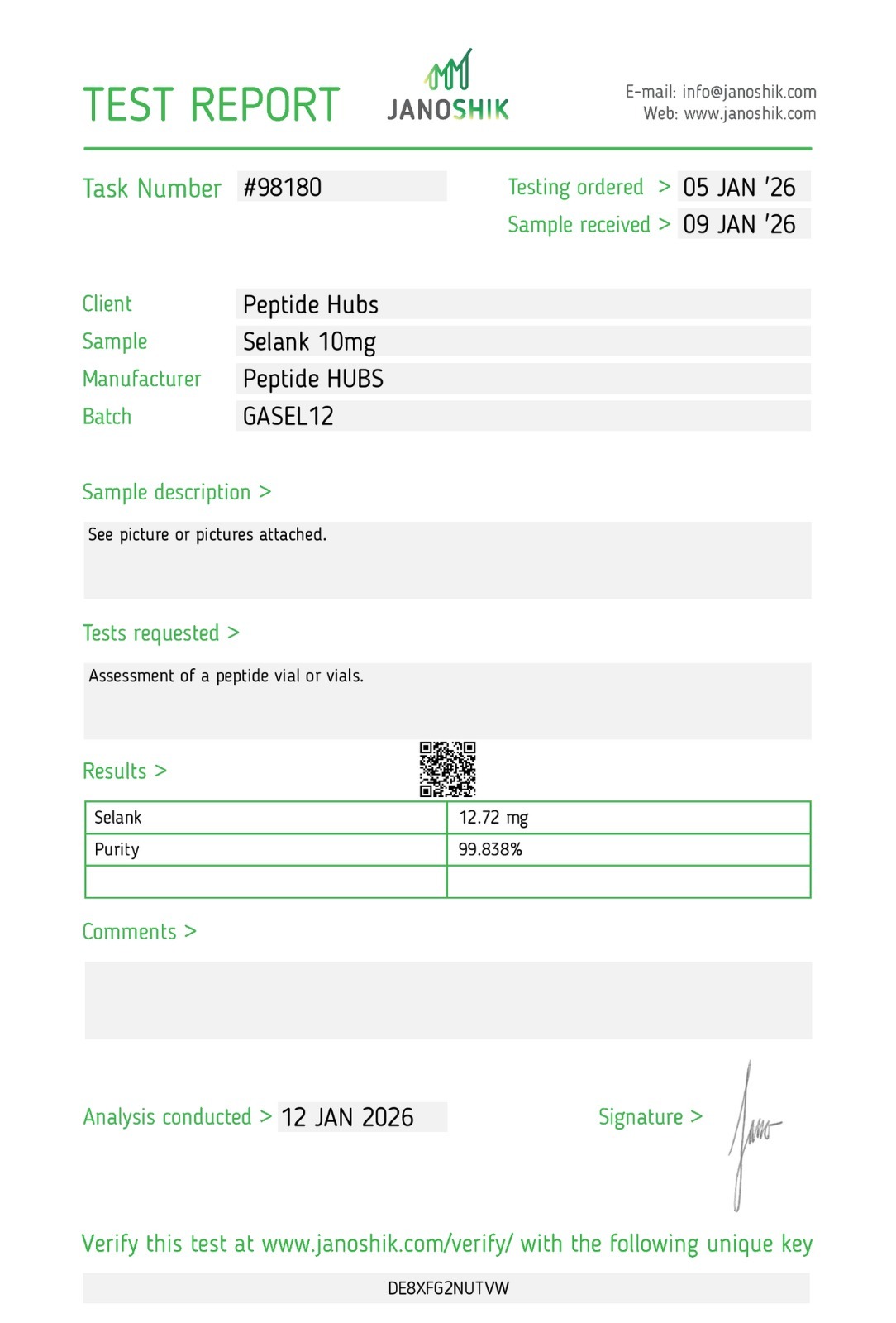
• Guaranteed purity: Each batch of product undergoes dual testing by HPLC and mass spectrometry, with a purity ≥99%. Verified by an independent third-party laboratory, it is free from bacterial contamination, impurities, and amino acid sequence deviations, ensuring the accuracy and reliability of research data. It is a white to off-white loose powder, easily soluble in water, PBS, and physiological saline. The aqueous solution is clear, consistent with the typical physicochemical characteristics of Selank. Its pH range is 4.0-7.5, suitable for scientific experiments under physiological conditions. Its cationic properties facilitate binding to cell membranes, enhancing experimental results.
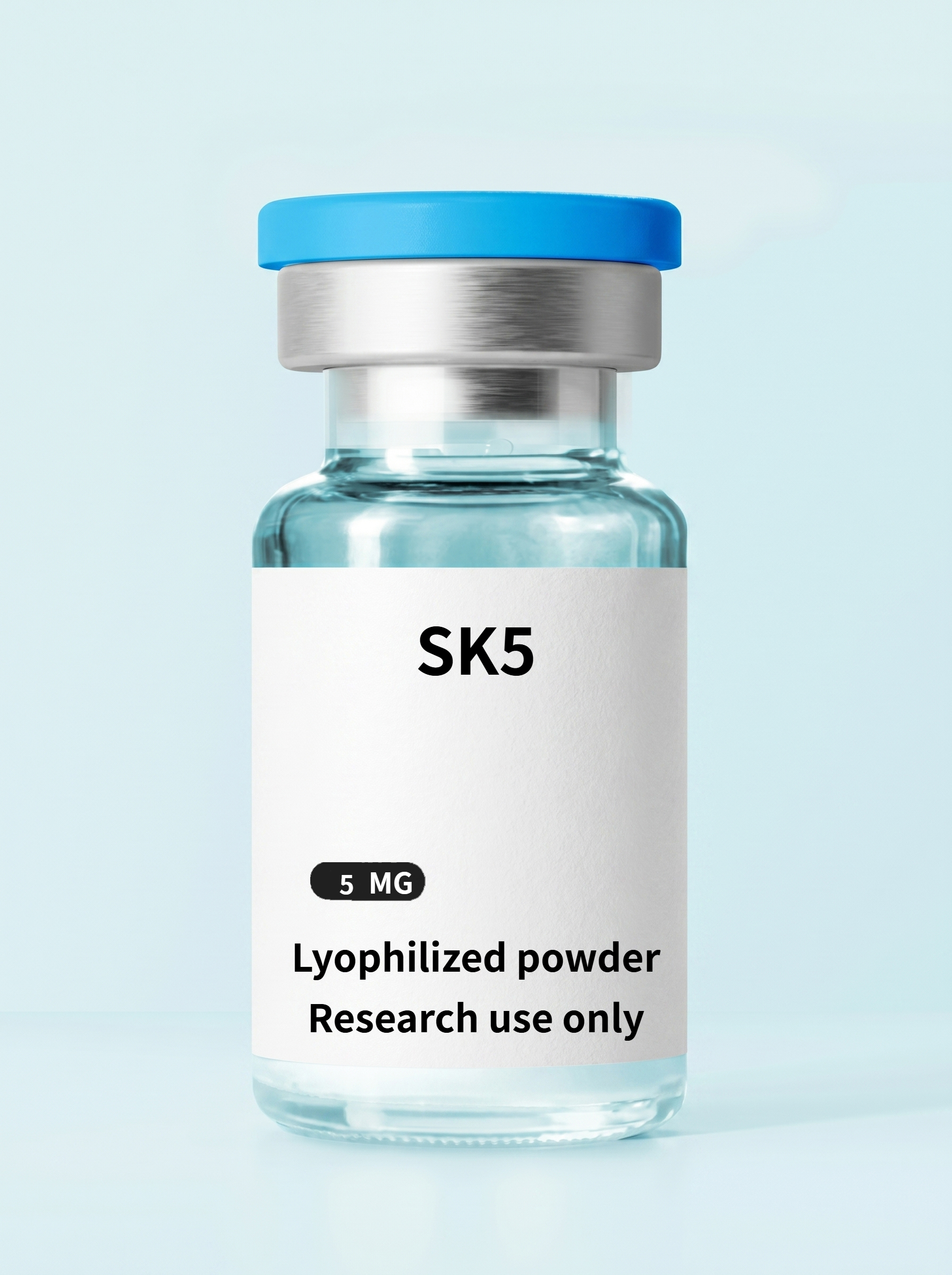
• Precise Dosage: 5 mg vials are ideal for research dosage requirements, allowing for flexible concentration adjustments based on experimental protocols (e.g., 0.1-1 μM for cell experiments, 0.04%-0.12% for intranasal administration, and 30-80 μg/mL for subcutaneous injection), avoiding dosage waste and meeting the needs of various research scenarios such as cell experiments, animal models, combination drug studies, and intranasal administration experiments, adapting to their narrow therapeutic window requirements.
• Superior Stability: Lyophilized powder formulation, strictly adhering to GMP-grade production standards, can be stored for extended periods (≥2 years) under dry, light-protected, and sealed conditions at -20°C. The peptide chains contain no easily oxidized amino acids, exhibiting excellent stability and effectively preventing peptide chain degradation, maintaining activity. After reconstitution, it remains stable for 7 days at 4°C and 24 hours at room temperature, adapting to global laboratory transportation and storage conditions, requiring no special antioxidant treatment, and facilitating research use.
• Structural Purity: Utilizing standard synthesis processes, the natural amino acid sequence of Selank (TKPRPGP) is precisely replicated. It is an L-type linear heptapeptide without any artificial terminal modifications, preserving the core active motif of Tuftsin and its C-terminal Pro-Gly-Pro extension structure. This completely eliminates the pro-inflammatory activity of natural Tuftsin, ensuring binding activity to the GABA receptor and dual neuro-immune regulatory efficacy. The sequence is completely identical to that of Selank used in clinical studies, guaranteeing experimental reproducibility.
• Research Use Only: Clearly labeled "For Research Use Only," strictly limited to cell experiments, animal models, and studies on mechanisms related to anti-anxiety, cognitive regulation, neuroprotection, and immune regulation. Non-research use is strictly prohibited. A complete quality control report, reconstitution guidelines, and storage instructions are provided, reminding users to accurately prepare the concentration according to the administration method and to pay attention to storage conditions to avoid peptide degradation affecting experimental results.
For researchers exploring mechanisms of neuroemotional regulation, cognitive modulation, neuroprotection, and neuroimmune balance, Selank is undoubtedly a key tool molecule for unlocking the potential of neuro-immune synergistic regulation and promoting breakthroughs in interdisciplinary research. Its dual central-peripheral targeting, potent activity, and good safety profile make it one of the most valuable research peptides in the intersection of neuroscience and immunology, and it is widely used in scientific research in life sciences, pharmaceutical development, neurorehabilitation, and other related fields.
Unopened Powder
Store the sealed Selank vials in a cool, dry place, away from direct sunlight and moisture. You can leave it at room temperature briefly, but longer storage is better—refrigerate at 2–8°C if you plan to use it within a few weeks. If you plan to store it for an even longer period, freeze it at -20°C; it can be stored for several months.
After Reconstitution
Mix the peptides with the antibacterial water and immediately refrigerate at 2–8°C. Note: Do not freeze after mixing. Temperature fluctuations will damage the peptide structure. Keep the vials in a cool, dark place in the refrigerator, or wrap them in aluminum foil—light is detrimental to peptide stability.
Shelf Life
Properly refrigerated Selank can typically be stored for 28 to 56 days. However, note that its potency will decrease over time. Before each use, quickly check the solution. Discard the solution if it is cloudy, discolored, or contains floating matter. Handling and Safety: Always use aseptic techniques when handling peptides. Avoid frequent opening of vials—each opening introduces air, affecting peptide stability. Also, avoid repeated freeze-thaw cycles, as this accelerates peptide breakdown. Ensure containers are tightly sealed to prevent moisture absorption.
Quick Tip: Powdered products are best stored at 2–8°C. After mixing, use within 4–8 weeks and always refrigerate. Always protect from light, heat, and moisture. For clinical applications or specific handling guidelines, consult the product instructions or a qualified researcher.
What are the storage Selank
Store it at -20°C until use. After reconstitution, refrigerate and consume within 30 days. It is very easy to use, even for graduate students.
Is it legal to purchase for research use?
It is completely legal for laboratory and educational use. The U.S. Food and Drug Administration (FDA) has not approved it for therapeutic use, but related research can be conducted without legal hindrance. Do not self-medicate—this is both illegal and unwise.
How to recombine the peptide?
Use immediately with sterile water. Antibacterial water can prolong the stability of the solution. Add the liquid slowly dropwise along the side of the vial—adding it directly to the powder will cause unnecessary agitation.
Is there an analytical certificate?
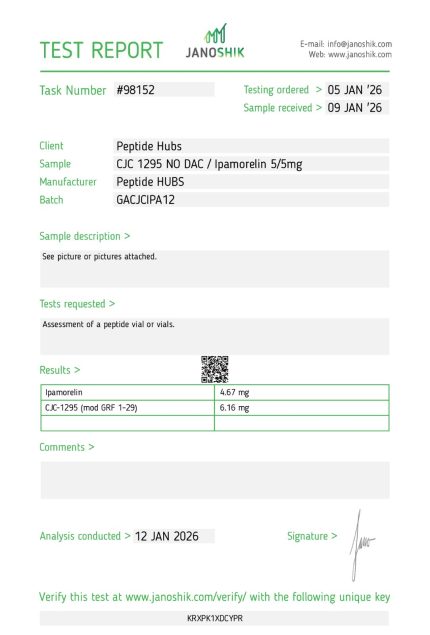
Each batch of product includes complete analysis. HPLC purity testing, mass spectrometry confirmation, endotoxin level testing—all the tests expected by professional researchers are included.
What if recombination fails?
Contact us immediately. We prefer to guide you through the entire process rather than waste valuable peptides due to rushed operations or unfamiliarity with the correct techniques.


No account yet?
Create an AccountOnly registered users can access this website. You must log in or create an account to place an order.
The products on this website are for legitimate research use only. They have not been evaluated by the Food and Drug Administration (FDA), and they are not intended to prevent, treat, or cure any disease or for human consumption. Please comply with all applicable laws and regulations. Consult with a qualified researcher before beginning any study.
Age Restrictions: By accessing this site, you acknowledge that you are at least 21 years of age, understand these terms, and have a legitimate research basis for purchasing these products.
* Note: All of our compounds are sold separately and do not include research supplies such as bacteriostatic water or syringes. Most are sold in powder form and need to be reconstituted with a suitable diluent solution prior to study.

Reviews
There are no reviews yet.