
Uncategorized

Kisspeptin-10 Peptide: Functional Dynamics and Research Progress

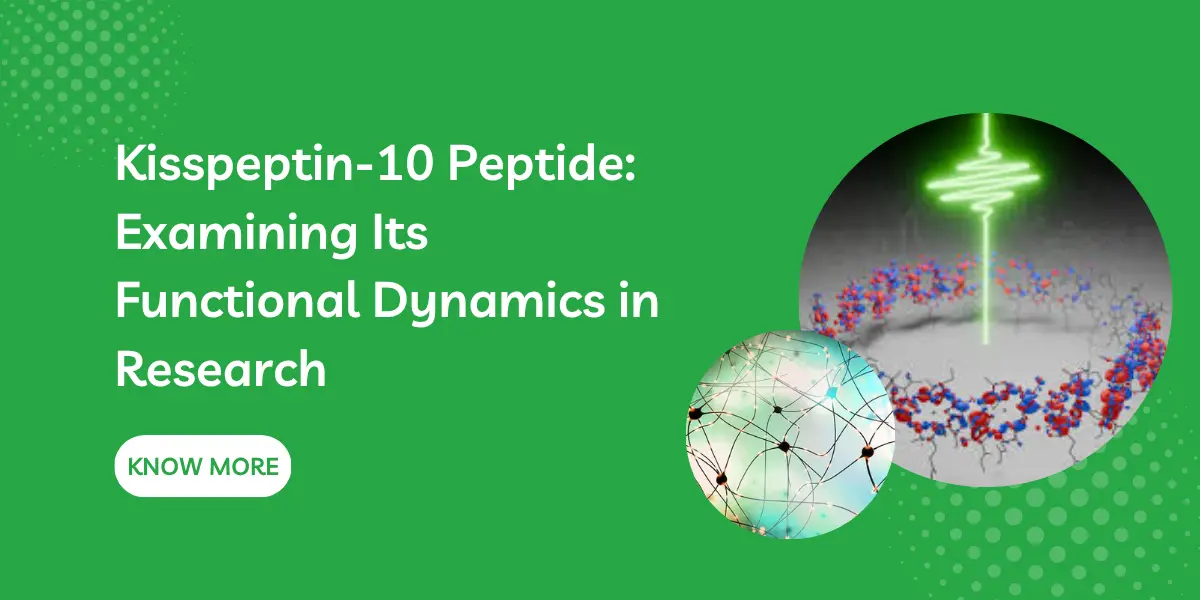
In the field of neuroendocrinology, Kisspeptin family has attracted much attention, among which Kisspeptin-10 (KP-10) has completely changed the human understanding of brain and reproductive organ regulatory pathways. This peptide was originally identified as metastasis-inhibiting factor (formerly known as "metastin") and is today the key "gatekeeper" of the hypothalamic-pituitary-gonadal axis (HPG axis). The acquisition of high-purity KP-10 provides an important support for the analysis of puberty initiation, fertility recovery and metabolic-reproductive signal transduction. This paper briefly discusses its structure, function and research progress.

With the deepening exploration of hormone regulation mechanism by researchers, the demand for high-purity peptides is increasingly urgent. The acquisition of high-purity Kisspeptin-10 makes it possible to carry out refined in vitro experiments and animal model studies, thus helping researchers to deeply analyze the internal mechanism of puberty initiation, fertility recovery and metabolic-reproductive signal transduction. In this paper, the structural characteristics, physiological functions of Kisspeptin-10 and the latest progress in related studies are systematically discussed.

The Origin and Structural Characteristics of Kisspeptin Family

Kisspeptin is encoded by KISS1 gene, which is mainly synthesized and released in the hypothalamus. Its core function is to stimulate the secretion of gonadotropin-releasing hormone (GnRH). According to the number of amino acids, Kisspeptin can be divided into many subtypes, and KP-10 is the most biologically active member. Its truncated structure can play a role quickly and become a core tool peptide for laboratory observation of immediate neuroendocrine response.

Mechanism of Action: a Key Regulator of Puberty Initiation

KP-10 is mainly synthesized in the hypothalamic arcuate nucleus (ARC) and anterior ventral paraventricular nucleus (AVPV) and initiates signaling by binding to the G-protein-coupled receptor KISS1R (formerly called GPR54).

Signal transduction pathway

KP-10 combined with phospholipase C (PLC) activates related pathways, triggers the second messenger cascade reaction, and realizes the depolarization and discharge of GnRH neurons. GnRH neurons need KP-10 as a mediator to respond to metabolic signals, highlighting its unique regulatory status.

Genetic significance

The KISS1 gene is critical for reproductive health: inactivating mutations cause hypogonadotropic hypogonadism (HH), leading to puberty arrest and infertility; activating mutations cause precocious puberty. Laboratories often use KP-10 to explore ways to correct reproductive disorders associated with genetic abnormalities.

Physiological function range: multiple system regulation

The function of KP-10 is not only limited to initiating GnRH pulses, but also extends to many biological systems throughout the reproductive cycle.

Regulation of key nodes in reproductive development

KP-10 participates in all stages of mammalian reproduction, including promoting oocyte maturation and ovulation, regulating spermatogenesis microenvironment, and participating in the invasion of placental trophoblast cells, which is an important object of placental health research.

Neurobiological Regulation of Behavior and Emotion

Kisspeptin-10 receptor is widely distributed in the brain regions related to olfaction, fear and sexual arousal, which may be involved in attraction perception and anxiety relief, and is the core molecule of the "limbic system-endocrine system" interaction.

Integrated regulation of nutrition and metabolism

KP-10 is a key bridge between nutritional status and HPG axis, and its expression decreases when energy reserve is insufficient, which will trigger the "off" signal of reproductive function and provide an important target for the study of the relationship between metabolism and fertility. Comparative analysis: differences with traditional regulatory compounds

Kisspeptin-10 and HCG (Human Chorionic Gonadotropin)

HCG directly stimulates LH to stimulate testosterone secretion at the testicular level, while KP-10 regulates the release of endogenous LH and FSH from the pituitary, which is more conducive to maintaining testosterone levels and sperm count, and can reduce adverse reactions such as testicular atrophy.

Kisspeptin-10 and Gonadorelin (Gonadotropin-Releasing Hormone Analogue)

Gonadorelin directly stimulates the pituitary to secrete LH and FSH, while KP-10 indirectly regulates the hypothalamus to release GnRH autonomously, which is more in line with the physiological law and is conducive to improving the accuracy of experimental data.

Research prospects and conclusions of Kisspeptin-10

The versatility of KP-10 makes it a core tool for endocrine research, which can be used for infertility HPG axis restart, cancer metastasis inhibition and other studies. Its rapid onset and strong receptor affinity make it the first choice for reproductive development signal transduction research. KP-10 is a key signal substance to coordinate the preparation of the reproductive system, which acts on the top of the HPG axis and provides an important window for understanding neuroendocrine regulation. In the future, it will continue to lead breakthroughs in the field of cell signaling and neuroendocrine, and provide important support for reproductive and metabolic health research.

Leave a Reply

Your email address will not be published. Required fields are marked *