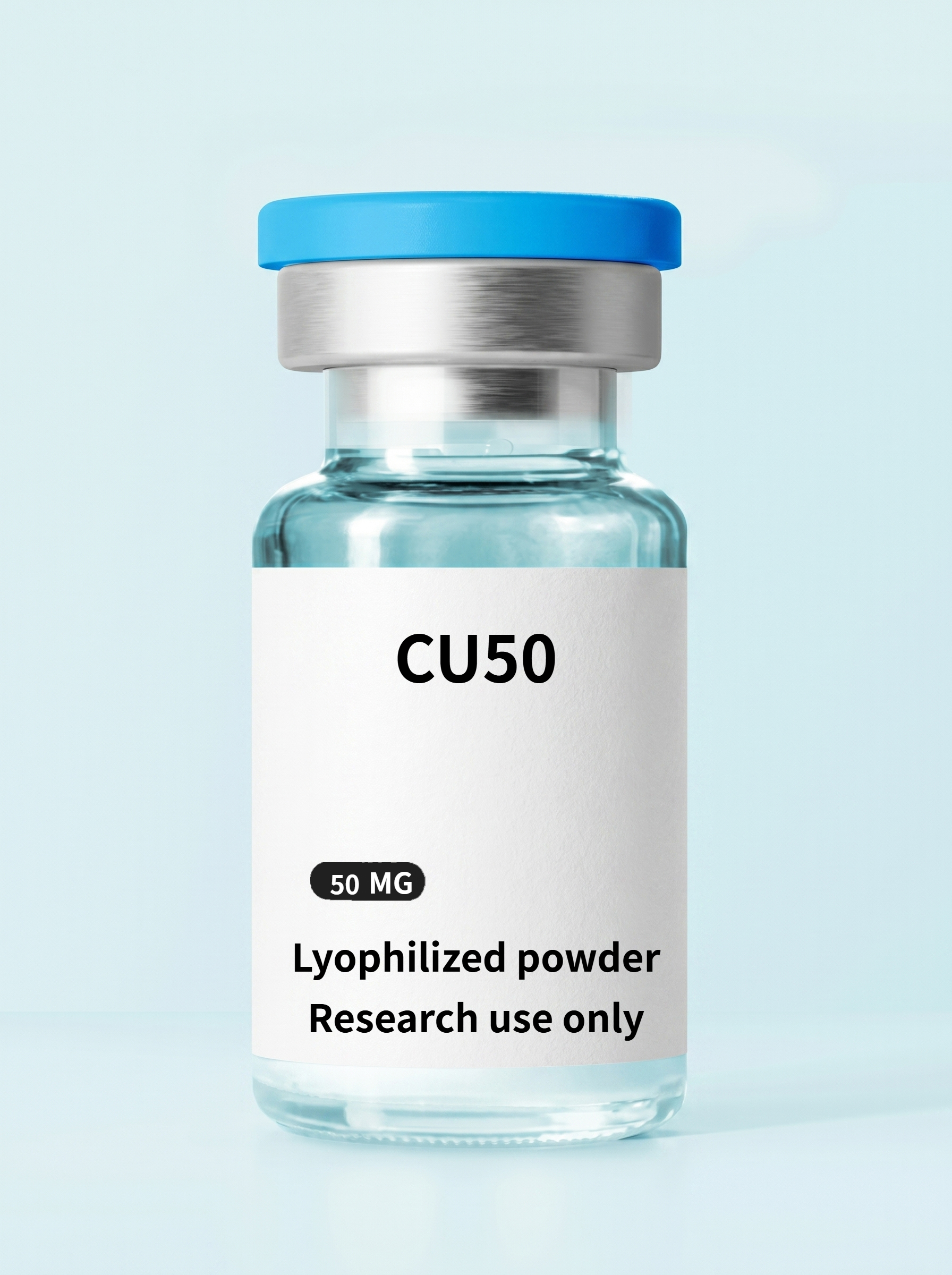
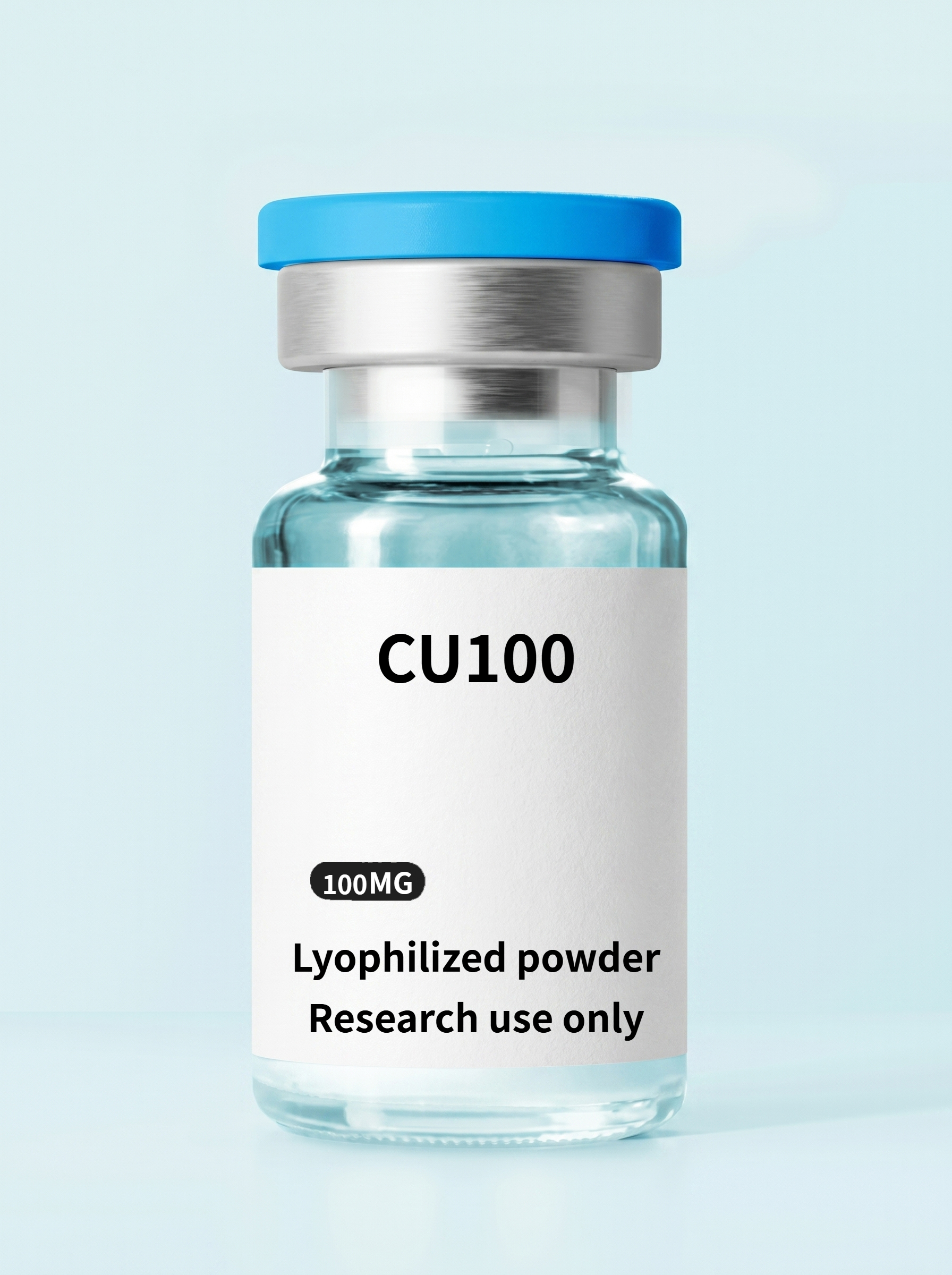
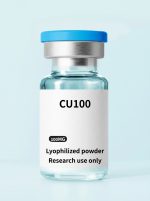
Price range: $48.00 through $60.00
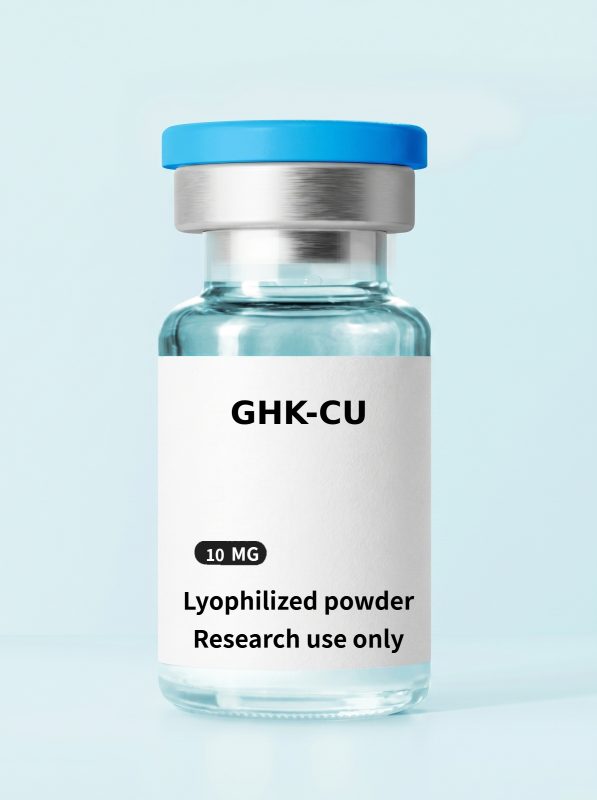
GHK-Cu (Blue Copper Peptide) 5 mg - Premium Research Peptide | PeptideHubs
What is GHK-Cu? Overview
In the research fields of tissue repair, anti-aging, and cellular homeostasis regulation, a peptide molecule with both natural properties and potent activity has always occupied a central position—GHK-Cu (glycyl-histyl-lysine-copper complex, also known as blue copper peptide), an endogenous tripeptide-copper chelate naturally found in human plasma, saliva, and urine, was first isolated from human plasma albumin by American scientist Dr. Loren Pickart in 1973. It is not a single-function repair molecule, but rather, through precise chelation of copper ions, it simultaneously regulates cell repair, anti-oxidation, anti-inflammation, and gene expression, acting like an all-around cellular care specialist, playing a core regulatory role in the body's damage repair and aging process.
The unique advantage of this peptide lies in the perfect combination of its "natural compatibility" and "synergistic activity." As an endogenous peptide secreted by the human body, GHK-Cu is highly compatible with the body's physiological systems, non-immunogenic, and extremely safe. Simultaneously, by forming a stable structure through a 1:1 chelation with copper ions, it not only solves the cytotoxicity problem of free copper ions but also significantly enhances its own anti-enzymatic ability and bioactivity. Researchers have described it as a repair expert with "precise tools," safely delivering essential copper to the body while initiating the cell's own repair processes—a natural synergy that other exogenous repair peptides struggle to achieve.
The concentration of GHK-Cu in human plasma decreases significantly with age. In healthy individuals around 20 years old, the plasma concentration is approximately 200 ng/mL, dropping to below 80 ng/mL by age 60. This concentration decline is directly related to skin aging, decreased tissue repair capacity, and increased levels of chronic inflammation, making it a core target for anti-aging and tissue repair research.
GHK-Cu Peptide Structure
Amino Acid Sequence: Gly-His-Lys (glycyl-histyl-lysine), chelated with copper ions (Cu²⁺) in a 1:1 ratio via coordination bonds to form a stable complex. CAS No. 49557-75-7, molecular weight approximately 404.04 Da. Due to its characteristic sky-blue color in aqueous solution, it is commonly known as blue copper peptide.
Its structure is ingeniously designed and closely matches human physiological needs. Its core structural highlights and advantages are as follows:
• Natural Tripeptide Backbone: Composed of three natural amino acids—glycine (Gly), histidine (His), and lysine (Lys)—without artificial modification, it is completely identical to peptides found in the human body, possessing excellent biocompatibility and the ability to freely penetrate the stratum corneum and cell membranes.
• Precise Copper Chelating Structure: The imidazole ring of histidine serves as the core chelating site, forming a stable five-membered ring rigid structure with the amino nitrogen of glycine and lysine, locking in the optimal conformation for receptor binding. This results in receptor affinity more than 100 times higher than free GHK, and bioactivity increased by 10-100 times.
• Dual Stability Modification: The chelating structure not only shields the cleavage sites of peptidases, resisting degradation by aminopeptidases and carboxylpeptidases in vivo, extending the in vivo half-life by 5-8 times compared to free GHK, but also enhances lipid solubility, with a transdermal absorption rate more than 3 times that of free GHK, allowing it to efficiently reach the dermis to exert its effects.
This ingenious chelating structure makes GHK-Cu a natural copper ion transporter in the human body. It can safely deliver copper ions into cells for slow release, avoiding the toxicity of free copper, and can also initiate signal transduction through the tripeptide backbone, regulating the expression of thousands of genes. When it binds to target cells, it simultaneously activates repair, antioxidant, and anti-inflammatory pathways. Researchers, observing its gene regulatory effects, are amazed by the precise regulatory capabilities of this natural molecule, which "simplifies complexity."
To date, core research on GHK-Cu has progressed from cell experiments and animal models to some human clinical trials. Its effects in tissue repair, skin anti-aging, and neuroprotection have been fully validated. Although it has not yet received approval from regulatory agencies such as the FDA for clinical treatment, it has become a core research subject in scientific research and the beauty industry.
GHK-Cu Peptide and Skin Repair and Anti-Aging
The most core and extensive research value of GHK-Cu lies in skin repair and anti-aging. Its effects cover multiple stages, including skin cell proliferation, collagen synthesis, and barrier repair, providing an important tool for studying the mechanisms of skin damage and aging. In skin cells and animal models, its repair and anti-aging effects have shown significant advantages.
Its core mechanism of action is clear and well-defined:
• Promotes collagen and elastin synthesis: Activates skin fibroblasts, promotes the synthesis of type I and type III collagen and elastin, while increasing the production of glycosaminoglycans (GAGs), improving skin firmness, reducing wrinkles, and reversing skin aging phenotypes.
• Accelerates wound healing: At a concentration of 1 nM, it can promote the expression of basic fibroblast growth factor (bFGF) and vascular endothelial growth factor (VEGF), promote angiogenesis, accelerate blood flow to damaged tissue, and improve the speed and quality of wound healing; liposome-encapsulated GHK-Cu can significantly accelerate the healing of burn wounds in mice.
• Repairs the skin barrier: Regulates the metabolism of the stratum corneum, enhances the skin's water-locking capacity, improves the fragile state of sensitive skin and post-cosmetic procedures, alleviates skin redness, dryness, and other discomforts, while inhibiting the activity of matrix metalloproteinases (MMPs) and reducing collagen degradation.
• Antioxidant and Anti-inflammatory: A concentration of 10 μM can reduce the level of reactive oxygen species (ROS) in Caco-2 cells induced by tert-butyl hydroperoxide by nearly 50%; it also inhibits the expression of pro-inflammatory factors (IL-1β, TNF-α), alleviates chronic skin inflammation, and reduces oxidative stress damage to skin cells.
Studies have confirmed that GHK-Cu can regulate the expression of more than 4,000 genes in the human body, and can reverse the gene expression profile of aging skin cells to a youthful cell state, providing a unique molecular tool for skin anti-aging research.
GHK-Cu Peptide and Tissue Repair (Tendons, Trauma)
GHK-Cu shows broad potential in the field of systemic tissue repair, especially in tendon repair and wound healing. Its repair effect is not limited to the skin, but also has significant regulatory effects on connective tissues such as bones and tendons.
Its core repair performance:
• Tendon Repair: Joint injection of 0.3 mg/mL GHK-Cu can significantly improve the repair effect in anterior cruciate ligament reconstruction (ACLR) rat models, enhance tendon cell activity, promote tendon tissue remodeling, and enhance tendon strength and function. • Wound Repair: As an "emergency response molecule" in the body, GHK-Cu can be released from the extracellular matrix after tissue injury, recruiting immune cells to the site of injury to initiate the repair process. Simultaneously, it promotes the synthesis of decorin (a proteoglycan involved in collagen regulation and wound healing), improving the quality of repair.
• Multi-Tissue Repair: In addition to skin and tendons, GHK-Cu can also promote the repair of damage to organs such as the liver and kidneys, alleviate chemical liver injury, and inhibit renal tubular cell apoptosis, providing new insights for research on multi-organ injury repair.
GHK-Cu Peptide and Neuroprotection and Cognitive Improvement: GHK-Cu can efficiently penetrate the blood-brain barrier through intravenous injection and enter the brains of rodents and non-human primates, demonstrating good research potential in the fields of neuroprotection and cognitive improvement, providing new molecular targets for research on neurodegenerative diseases.
Its neuroprotective and cognitive regulation mechanisms:
• Improved cognitive function: In 28-month-old male C57BL/6 mice, administration of 10 mg/kg body weight five times a week for three weeks significantly improved cognitive ability in a box maze spatial navigation learning task, enabling them to find escape holes faster than the saline control group.
• Inhibition of neuroinflammation and epigenetic regulation: Immunohistochemical analysis of brain tissue from treated mice showed that GHK-Cu reduced intracranial inflammatory responses, increased histone deacetylase 2 expression, and improved cognitive impairment in aging mice through epigenetic pathways.
• Neuroregeneration and protection: It promotes the expression of brain-derived neurotrophic factor (BDNF), protects neurons from oxidative stress and inflammatory damage, and reduces neuronal apoptosis, demonstrating potential protective effects in models of neurodegenerative diseases such as Alzheimer's disease.
GHK-Cu peptides and antioxidant and systemic anti-inflammatory effects: As a potent natural antioxidant peptide, GHK-Cu has antioxidant capacity far exceeding that of vitamin C and vitamin E, and also possesses significant systemic anti-inflammatory effects, making it valuable in research on oxidative stress-related diseases and chronic inflammation. Its core mechanisms of action include:
• Comprehensive antioxidant effects: By upregulating the Nrf2/Keap1 signaling pathway, it activates the expression of antioxidant enzymes such as superoxide dismutase (SOD) and glutathione peroxidase, while directly scavenging harmful free radicals such as reactive oxygen species (ROS) and hydroxyl radicals, reducing oxidative stress damage to DNA, proteins, and lipids.
• Systemic anti-inflammatory regulation: By downregulating the NF-κB signaling pathway, it inhibits the overexpression of pro-inflammatory factors, alleviating chronic inflammatory responses; in a lipopolysaccharide-induced acute lung injury model in mice, it reduces ROS production, inhibits NF-κB p65 and p38 MAPK signaling, and alleviates lung inflammation.
• Protection against oxidative damage to organs: In a mouse model exposed to cigarette smoke, intraperitoneal injection of GHK-Cu (0.2-20 μg/g/day) reduced emphysema-like changes and the expression of inflammatory markers, protecting lung tissue from oxidative damage. GHK-Cu Peptide and Safety
GHK-Cu, as an endogenous peptide in the human body, has demonstrated excellent safety in preclinical and preliminary human studies, with few and mild adverse reactions. The core risks are related to dosage and method of administration, and its use must be strictly limited to research settings:
• Common Reactions: Local skin reactions are the most common. Approximately 5-12% of subjects using topical formulations at concentrations of 0.5-2 mg/mL may experience mild erythema, itching, or contact dermatitis, which usually subsides within 24-48 hours after discontinuation. With subcutaneous injection, approximately 10-25% of users may experience mild redness and itching at the injection site, which is mostly transient and gradually lessens as the body adapts.
• Potential Risks: Long-term or high-dose use may lead to local copper ion accumulation, especially in patients with Wilson's disease. The incidence of adverse reactions increases significantly when the topical concentration exceeds 1-2 mg/mL. Currently, there are no long-term human safety data exceeding 12 weeks. Drug interactions may affect its safety (e.g., concomitant use with copper chelators or some antibiotics).
• Important Reminder: GHK-Cu has not been approved for human treatment by any regulatory agency, including the FDA and EMA, and is for research use only. Products from unofficial channels may have insufficient purity or bacterial contamination, seriously affecting research safety.
Overall, GHK-Cu is well-tolerated at regulated research doses. Its natural, endogenous properties make it far safer than synthetic exogenous peptides, making it a safe and reliable research tool.
Future GHK-Cu Research and Clinical Trials
As a multi-target regulatory peptide, the research boundaries of GHK-Cu continue to expand. Although it has not yet progressed to large-scale Phase III clinical trials, its research value in multiple fields continues to be explored:
• Completed Studies: Cell and animal experiments on skin repair and anti-aging mechanisms, tendon and wound repair, preliminary exploration of neuroprotection, antioxidant and anti-inflammatory effects, as well as a small number of preliminary human trials for topical application, have clarified its core mechanism of action and safety.
• Ongoing Research: In-depth exploration of neurodegenerative diseases (Alzheimer's disease), repair research on chronic wounds (such as diabetic foot), protective mechanisms against liver and kidney damage, preclinical studies on hair regeneration, and synergistic effects of GHK-Cu with other peptides.
• Cutting-Edge Research: Structural optimization and dosage form improvement of GHK-Cu (such as long-acting sustained-release formulations and liposome encapsulation formulations) to enhance bioavailability; exploring its deep mechanisms in epigenetic regulation and gene expression regulation; expanding its industrial applications in cosmetics, medical repair dressings, and other fields.
Current research focuses on exploring the non-skin repair functions of GHK-Cu, clarifying its mechanisms of action in neuroprotection and multi-organ injury repair, while simultaneously advancing dosage form optimization to provide more precise and efficient tools for research on related diseases.
Our GHK-Cu boasts the following significant characteristics:
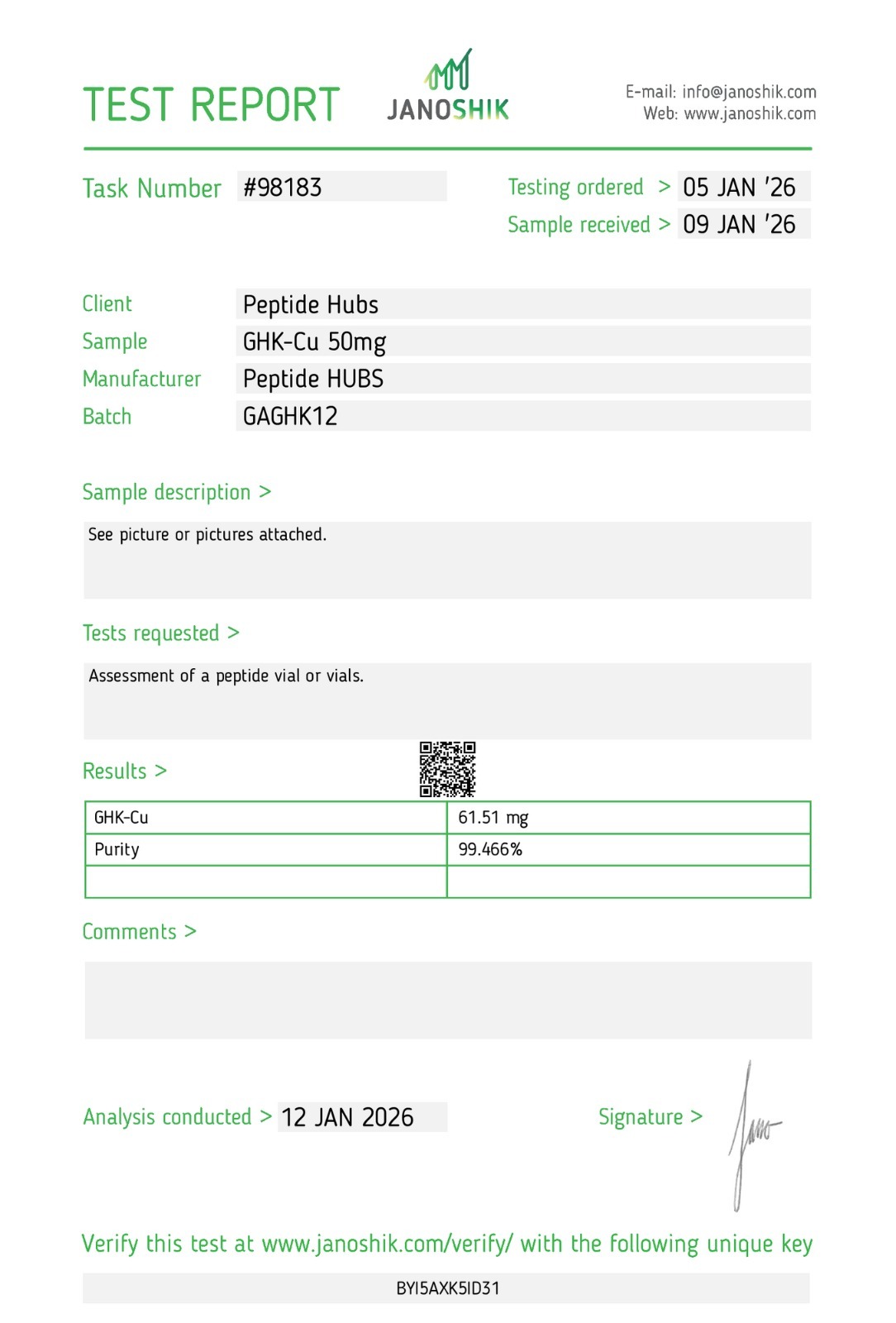
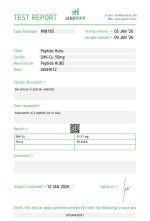
• Guaranteed Purity: Each batch undergoes dual testing by HPLC and mass spectrometry, ensuring a purity of ≥99%. Verified by an independent third-party laboratory, it is free from bacterial contamination and impurities, guaranteeing the accuracy and reliability of research data. It is a loose, bluish-purple powder, and its aqueous solution is a characteristic sky-blue color, consistent with the typical physicochemical characteristics of GHK-Cu.
• Precise Dosage: Packaged in 5 mg vials, it is tailored to specific research dosage requirements. Different concentrations can be flexibly configured according to experimental protocols (e.g., 0.01-1% for external use, 1-2 mg/day for subcutaneous injection), avoiding dosage waste and meeting the needs of various research scenarios such as cell experiments and animal models.
• Superior Stability: A lyophilized powder formulation, strictly adhering to GMP-level production standards, it can be stored for extended periods (≥2 years) under dry, light-protected, and sealed conditions at -20°C, maintaining stable activity without degradation. After reconstitution, it remains stable for 6 months when refrigerated at 4°C, adapting to the transportation and storage conditions of laboratories worldwide.
• Structural Purity: Utilizing a 1:1 copper chelation process, the amino acid sequence is completely identical to that of endogenous human GHK, with no unnecessary modifications, ensuring bioactivity and experimental reproducibility while avoiding the cytotoxicity of free copper ions.
• Research Use Only: Clearly labeled "For Research Use Only," strictly limited to cell experiments, animal models, and research on mechanisms related to tissue repair, anti-oxidation, and neuroprotection. Use for non-research purposes is strictly prohibited. A complete quality control report and reconstitution guide are provided.
For researchers exploring mechanisms of tissue repair, anti-aging, neuroprotection, and oxidative stress, GHK-Cu is undoubtedly a key tool molecule for unlocking the body's self-repair potential and driving breakthroughs in multiple research fields. Its natural properties and multi-target activity make it a highly valuable research peptide.
Unopened Powder
Store the sealed GHK-CU vials in a cool, dry place, away from direct sunlight and moisture. You can leave it at room temperature briefly, but longer storage is better—refrigerate at 2–8°C if you plan to use it within a few weeks. If you plan to store it for an even longer period, freeze it at -20°C; it can be stored for several months.
After Reconstitution
Mix the peptides with the antibacterial water and immediately refrigerate at 2–8°C. Note: Do not freeze after mixing. Temperature fluctuations will damage the peptide structure. Keep the vials in a cool, dark place in the refrigerator, or wrap them in aluminum foil—light is detrimental to peptide stability.
Shelf Life
Properly refrigerated GHK-CU can typically be stored for 28 to 56 days. However, note that its potency will decrease over time. Before each use, quickly check the solution. Discard the solution if it is cloudy, discolored, or contains floating matter. Handling and Safety: Always use aseptic techniques when handling peptides. Avoid frequent opening of vials—each opening introduces air, affecting peptide stability. Also, avoid repeated freeze-thaw cycles, as this accelerates peptide breakdown. Ensure containers are tightly sealed to prevent moisture absorption.
Quick Tip: Powdered products are best stored at 2–8°C. After mixing, use within 4–8 weeks and always refrigerate. Always protect from light, heat, and moisture. For clinical applications or specific handling guidelines, consult the product instructions or a qualified researcher.
What are the storage GHK-CU
Store it at -20°C until use. After reconstitution, refrigerate and consume within 30 days. It is very easy to use, even for graduate students.
Is it legal to purchase for research use?
It is completely legal for laboratory and educational use. The U.S. Food and Drug Administration (FDA) has not approved it for therapeutic use, but related research can be conducted without legal hindrance. Do not self-medicate—this is both illegal and unwise.
How to recombine the peptide?
Use immediately with sterile water. Antibacterial water can prolong the stability of the solution. Add the liquid slowly dropwise along the side of the vial—adding it directly to the powder will cause unnecessary agitation.
Is there an analytical certificate?
Each batch of product includes complete analysis. HPLC purity testing, mass spectrometry confirmation, endotoxin level testing—all the tests expected by professional researchers are included.
What if recombination fails?
Contact us immediately. We prefer to guide you through the entire process rather than waste valuable peptides due to rushed operations or unfamiliarity with the correct techniques.


No account yet?
Create an AccountOnly registered users can access this website. You must log in or create an account to place an order.
The products on this website are for legitimate research use only. They have not been evaluated by the Food and Drug Administration (FDA), and they are not intended to prevent, treat, or cure any disease or for human consumption. Please comply with all applicable laws and regulations. Consult with a qualified researcher before beginning any study.
Age Restrictions: By accessing this site, you acknowledge that you are at least 21 years of age, understand these terms, and have a legitimate research basis for purchasing these products.
* Note: All of our compounds are sold separately and do not include research supplies such as bacteriostatic water or syringes. Most are sold in powder form and need to be reconstituted with a suitable diluent solution prior to study.

Reviews
There are no reviews yet.