
Glutathione (GSH) 5 mg - Premium Research Peptide | PeptideHubs
What is Glutathione? Overview
In the core areas of cellular redox homeostasis, antioxidant regulation, and detoxification, an endogenous polypeptide permeating every cell of the human body plays a crucial role as a "cell guardian"—Glutathione (glutathione, abbreviated as GSH). First isolated and discovered in 1888 by the French chemist J. de Rey-Pailha de, this natural tripeptide is widely found in animals, plants, fungi, and some bacteria. It is the most abundant non-protein thiol in human cells and a core molecule maintaining normal cellular physiological functions. It is not a single-function antioxidant, but rather, through its own redox transformation, it simultaneously regulates antioxidant, detoxification, immune regulation, and gene expression, acting like an all-around cellular steward, playing an irreplaceable role in cellular metabolism, damage repair, and disease defense.
The unique advantage of this peptide lies in the perfect combination of its "natural compatibility" and "dynamic regulatory capacity." As an endogenous peptide synthesized by the human body, glutathione is highly compatible with the body's physiological systems, non-immunogenic, and extremely safe. It exists in both reduced (GSH) and oxidized (GSSG) forms, undergoing bidirectional conversion via NADPH as an electron donor under the catalysis of glutathione reductase. The GSH/GSSG ratio is a crucial indicator reflecting cellular oxidative stress levels. Researchers have described it as a "redox buffer" within cells, effectively scavenging harmful free radicals generated by metabolism and flexibly regulating intracellular redox balance—a dynamic adaptation and precise regulation that other exogenous antioxidants struggle to achieve.
The content of glutathione in human cells significantly decreases with age, environmental stress, and disease states. This decrease in concentration is closely related to cellular aging, increased oxidative damage, reduced detoxification capacity, and chronic inflammation, making it a core target for research on antioxidant, anti-aging, and disease mechanisms, and widely applied in cell experiments, animal models, and preliminary clinical studies.
Glutathione Peptide Structure
Amino acid sequence: γ-L-glutamyl-L-cysteyl-glycine (γ-Glu-Cys-Gly), CAS No. 70-18-8, molecular formula C₁₀H₁₇N₃O₆S, molecular weight approximately 307.33 Da. Its core active form is reduced glutathione (GSH), with the sulfhydryl group (-SH) on the cysteine residue being the main active group.
Its structure is simple yet highly functional. The key structural highlights and advantages are as follows, with each structural element providing a solid foundation for its physiological function:
• Natural tripeptide backbone: Formed by the linkage of three natural amino acids—glutamic acid (Glu), cysteine (Cys), and glycine (Gly)—through a special γ-amide bond. It is unmodified and completely identical to the glutathione synthesized by the human body, exhibiting excellent biocompatibility. It can freely penetrate cell membranes and is widely distributed within cells, plasma, saliva, and urine.
• Core Active Group: The sulfhydryl group (-SH) on cysteine residues is key to its antioxidant and detoxification functions. It can neutralize reactive oxygen species (ROS) by providing electrons or binding to toxic substances and heavy metals, thus achieving antioxidant and detoxification functions. Simultaneously, the sulfhydryl group can participate in disulfide bond exchange reactions, maintaining the reduced state of intracellular proteins.
• Dynamic Transformation Structure: Reduced GSH can be oxidized to oxidized GSH (GSSG). Two GSH molecules are linked by a disulfide bond to form GSSG. This transformation process is catalyzed by glutathione reductase, achieving dynamic regulation of redox homeostasis and ensuring the continuous stability of the intracellular antioxidant system.
This ingenious structural design makes Glutathione a core regulator of intracellular redox homeostasis, directly scavenging free radicals and detoxifying, while also acting as a cofactor for various enzymes, participating in metabolic and signal transduction pathways, and regulating cell proliferation, differentiation, and apoptosis. When it functions, it precisely maintains intracellular homeostasis through redox reactions of thiol groups. Researchers, observing its redox regulatory mechanism, are amazed by the precision and efficiency of this natural molecule in simplifying complex processes.
To date, core research on Glutathione has progressed from cell experiments and animal models to multiple clinical studies. Its effects in antioxidation, detoxification, liver protection, and immune regulation have been fully validated. Although widely used in scientific research and functional foods and pharmaceutical adjuvants, it has not yet received approval from regulatory agencies such as the FDA for the clinical treatment of specific diseases. Its core value lies in exploring its mechanisms in scientific research.
Glutathione Peptide and Antioxidant and Cell Protection
The most core and fundamental research value of Glutathione lies in its potent antioxidant effect. It is the most important endogenous antioxidant in cells, with antioxidant capacity far exceeding that of vitamin C and vitamin E. It can comprehensively protect cells from oxidative stress damage, providing an important tool for research on oxidative stress-related diseases. In cell and animal models, its antioxidant and cell-protective effects have shown significant advantages.
Its core mechanism of action is clear and well-defined:
• Direct free radical scavenging: By providing electrons through the sulfhydryl group of cysteine, it efficiently scavenges harmful free radicals such as reactive oxygen species (ROS) and hydroxyl radicals generated during cellular metabolism and respiratory bursts, neutralizing oxidative substances and preventing damage to DNA, proteins, and lipids, thus protecting cellular integrity.
• Activation of the antioxidant system: As an important cofactor for antioxidant enzymes such as glutathione peroxidase and glutathione S-transferase, it activates the body's antioxidant enzyme system and participates in the regeneration of antioxidants such as tocopherol and ascorbic acid, forming "dual antioxidant protection."
• Maintenance of redox homeostasis: Through the dynamic conversion of GSH and GSSG, it regulates intracellular redox balance, maintains the reduced state of proteins, protects enzyme activity, and ensures normal cellular metabolism and function. It can significantly reduce intracellular ROS levels even at a concentration of 10 μM.
• Protection of mitochondrial function: It penetrates the mitochondrial membrane, scavenges free radicals generated by mitochondria, reduces oxidative stress damage to mitochondria, maintains the stability of the mitochondrial electron transport chain, improves cellular energy metabolism efficiency, and delays cellular aging. Studies have confirmed that Glutathione can significantly reduce the risk of oxidative stress-related diseases. In models of oxidative damage induced by cigarette smoke exposure and drugs, Glutathione supplementation can effectively alleviate tissue damage and protect cell function, providing a unique molecular tool for anti-oxidation and anti-aging research.
Glutathione Peptide and Regulation of Detoxification Function
Glutathione is the most essential endogenous detoxification molecule in the human body. Its detoxification function covers a variety of harmful substances, including heavy metals, drugs, and toxins, playing a crucial role, especially in liver detoxification. It provides an important tool for research on detoxification mechanisms and poisoning-related diseases.
Its core detoxification mechanisms and manifestations:
• Heavy metal detoxification: Through the formation of stable complexes with heavy metal ions such as lead, mercury, and arsenic via sulfhydryl groups, it promotes the excretion of heavy metals from the body, reduces the accumulation of heavy metals in the body, and reduces damage to organs such as the liver and kidneys. It is particularly suitable for research models of heavy metal poisoning.
• Drug and Toxin Detoxification: Glutathione binds to drugs and toxins such as acetaminophen, mustard gas, and iodoacetic acid, and is catalyzed by glutathione S-transferase to form glutathione sulfide, converting harmful substances into harmless ones, promoting their excretion, and reducing drug and toxin toxicity. For example, in patients with acetaminophen overdose, intravenous injection of Glutathione reduced the incidence of liver injury from 18% to 5%.
• Liver Detoxification and Protection: Glutathione is present in extremely high amounts within hepatocytes and is a core substance for liver detoxification. It can reduce chemical-induced liver damage and promote hepatocyte repair. In models of alcoholic liver disease and drug-induced liver injury, Glutathione supplementation significantly improves liver function.
Furthermore, Glutathione can participate in the biotransformation of exogenous substances, converting harmful toxins in the body into harmless substances for excretion. Its detoxification function is closely related to human health and is a core molecular target for research on poisoning mechanisms.
Glutathione Peptide and Immunomodulation and Anti-inflammation
Glutathione is an important bridge connecting redox homeostasis and the immune system. It can bidirectionally regulate immune function, enhance the body's resistance, and has significant anti-inflammatory effects, making it valuable in the research of immune disorders and chronic inflammation.
Its immunomodulatory and anti-inflammatory mechanisms:
• Enhanced immune cell activity: Promotes the proliferation and activity of lymphocytes, macrophages, and natural killer cells (NK cells), enhancing the immune cells' ability to recognize and clear pathogens. In an HIV-TB co-infection model, Glutathione supplementation can increase CD4+ T cell count and enhance the body's resistance.
• Regulation of cytokine secretion: By downregulating the NF-κB signaling pathway, it inhibits the overexpression of pro-inflammatory factors (IL-1β, TNF-α) and promotes the secretion of anti-inflammatory factors (IL-10), alleviating chronic inflammatory responses and reducing tissue damage caused by inflammation.
• Repairing Immune Disorders: Glutathione improves immune function decline caused by oxidative stress, making it particularly suitable for research on immune disorders in aging and disease states. It can restore the body's immune balance, enhance resistance to pathogens, and simultaneously enhance the Th17 response in HIV patients, repairing intestinal mucosal defense function.
Animal experiments have confirmed that Glutathione supplementation can increase the activity of immune cells in immunocompromised models by 30%-50%, significantly enhancing the body's resistance and reducing the risk of infection, providing a reliable tool for research related to immune regulation.
Glutathione Peptides and Neuroprotection and Cognitive Improvement: Glutathione can cross the blood-brain barrier and exert a significant protective effect on the central nervous system, showing good research potential in areas such as neurodegenerative diseases and cognitive impairment, providing new molecular targets for the study of the mechanisms of related diseases.
Its neuroprotective and cognitive regulation mechanisms include:
• Improved cognitive function: In mild cognitive impairment (MCI) studies, supplementation with Glutathione precursors (N-acetylcysteine + glycine) improved cognitive function, enhancing memory and attention. A related clinical trial (NCT03493178) has preliminarily validated its effect on cognitive function improvement.
• Neuroprotective effects: Reduces oxidative stress and inflammation in the brain, protects neurons from free radical damage, and reduces neuronal apoptosis. In models of neurodegenerative diseases such as Alzheimer's and Parkinson's, it can reduce abnormal protein deposition and delay cognitive decline.
• Alleviation of neuroinflammation: Inhibits excessive activation of microglia, reduces the expression of neuroinflammatory markers, protects the stability of the brain microenvironment, provides favorable conditions for neuronal repair, and can also reduce damage from HIV-related neurodegenerative diseases.
Glutathione Peptide and Safety
Glutathione, as an endogenous peptide in the human body, has demonstrated excellent safety in preclinical and clinical studies, with few and mild adverse reactions. Core risks are related to dosage, method of administration, and specific populations, and its use must be strictly limited to research settings:
• Common Reactions: Local reactions are the most common. When administered subcutaneously, approximately 10%-20% of users experience mild redness, swelling, pain, and phlebitis at the injection site. When administered orally or intravenously, mild nausea, vomiting, abdominal pain, dizziness, and headache are occasionally observed; these are usually transient and gradually subside as the body adapts. Some individuals may experience allergic reactions such as rash and itching, but the incidence is low.
• Potential Risks: Long-term or high-dose use may lead to redox imbalance, especially in patients with Wilson's disease, potentially exacerbating copper ion accumulation. In elderly patients with chronic kidney disease, doses exceeding 600 mg/day increase the risk of decreased glomerular filtration rate by two times. Use with caution in patients experiencing acute asthma exacerbations, as the sulfhydryl groups may induce bronchospasm.
• Drug Interactions: Glutathione may be destroyed by oxidizing agents such as hydrogen peroxide and potassium permanganate, reducing its efficacy; it may competitively bind with heavy metal chelators, affecting heavy metal excretion; it should not be mixed with vitamin B12, vitamin K3, sulfonamides, tetracyclines, etc., during injection, as this may reduce the toxic side effects of mitomycin.
• Important Reminder: Glutathione has not been approved by any regulatory agency, such as the FDA or EMA, for the clinical treatment of any specific disease and is only for research use; products from unofficial channels may have insufficient purity or bacterial contamination, seriously affecting research safety; the aqueous solution is easily oxidized, so it is recommended to prepare and use it immediately.
Overall, Glutathione is well tolerated at standard research doses. Its natural endogenous properties make its safety far superior to synthetic exogenous peptides, making it a safe and reliable research tool. However, caution should be exercised when using it in special populations (pregnant women, children, and individuals with allergies).
Future Research and Clinical Trials of Glutathione
As a multi-target regulatory peptide, the research boundaries of Glutathione continue to expand. Multiple clinical studies have been initiated, and its scientific value in various fields continues to be explored:
• Completed Studies: Cell and animal experiments on antioxidant and cell protection mechanisms, heavy metal and drug detoxification, liver protection, and immune regulation, as well as preliminary clinical studies on mild cognitive impairment, drug-induced liver injury, and HIV-TB co-infection, clarifying its core mechanism of action and safety.
• Ongoing Studies: In-depth exploration of neurodegenerative diseases (Alzheimer's disease, Parkinson's disease), treatment research on chronic inflammation-related diseases (arthritis, pneumonia), adjuvant cancer therapy (enhancing chemotherapy efficacy by regulating redox balance), and further research on anti-aging mechanisms. Among these, the clinical trial related to mild cognitive impairment (NCT03493178) has completed its main research phase.
• Cutting-edge research: Improving Glutathione dosage forms (e.g., long-acting sustained-release formulations, targeted delivery formulations) to enhance bioavailability; exploring its deeper mechanisms in epigenetic regulation and gene expression regulation; studying its synergistic effects with other peptides (e.g., GHK-Cu, SS-31) to expand its research and application value in multiple fields; developing Glutathione precursor products to improve in vivo synthesis efficiency.
Current research focuses on exploring the non-antioxidant functions of Glutathione, clarifying its mechanisms of action in neuroprotection, adjuvant cancer therapy, and immune disorders, while simultaneously promoting dosage form optimization to provide more precise and efficient tools for research on related diseases.
Our Glutathione has the following significant characteristics:
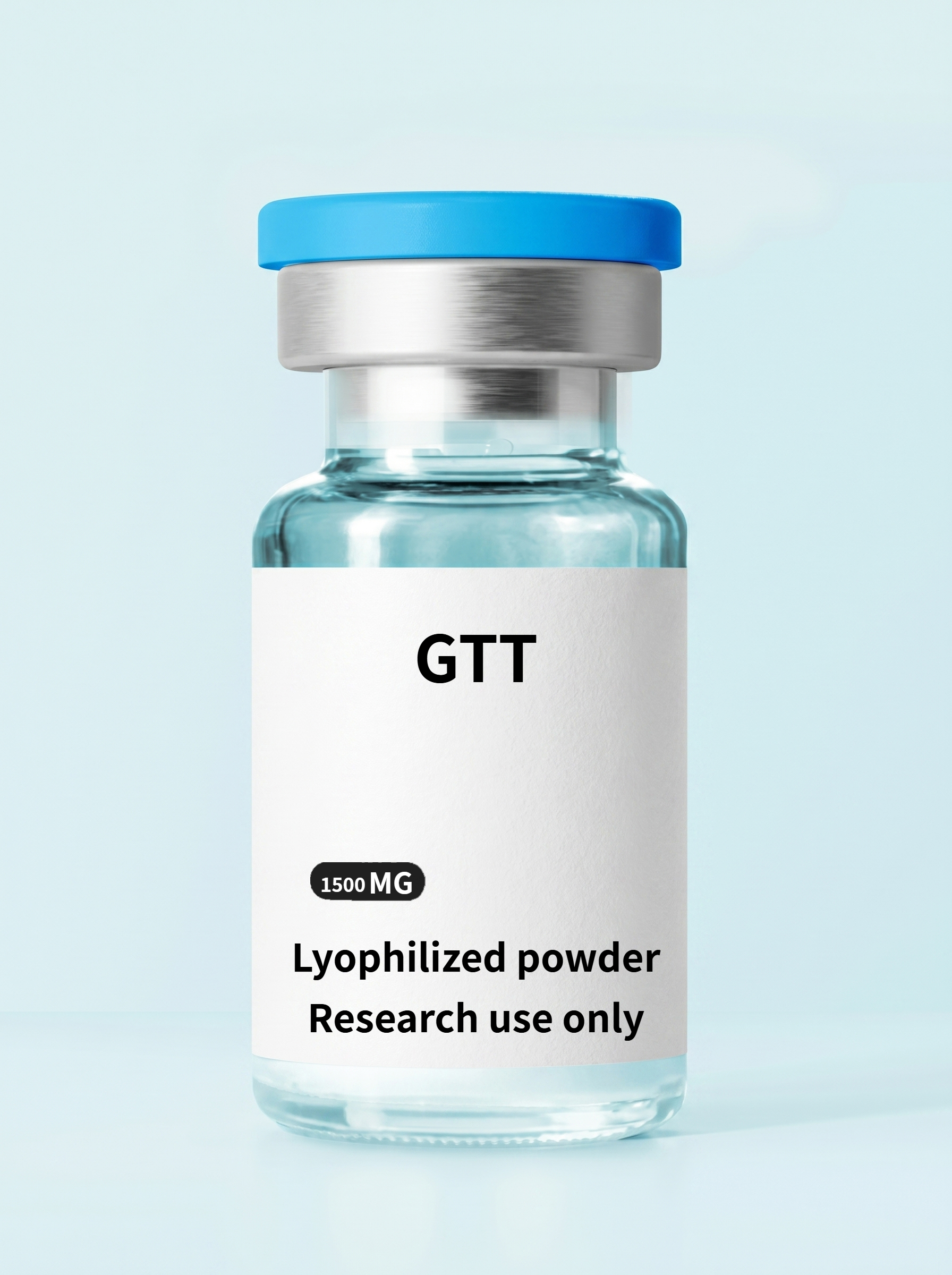
• Guaranteed purity: Each batch of product undergoes dual testing by HPLC and mass spectrometry, with a purity ≥99%, verified by an independent third-party laboratory, free from bacterial contamination and impurities, ensuring the accuracy and reliability of research data; it is a white to off-white crystalline powder, soluble in water (50 mg/mL), with a clear and colorless aqueous solution, consistent with the typical physicochemical characteristics of reduced glutathione.
• Precise Dosage: 5 mg vials are ideal for research dosage requirements and can be flexibly configured at different concentrations according to experimental protocols (e.g., 5-10 mM for cell experiments, 10-100 mg/kg for animal experiments), avoiding dosage issues.
This product is designed to meet the needs of various research scenarios, including cell experiments and animal models.
• **Extremely Stable:** This lyophilized powder formulation strictly adheres to GMP-grade production standards. It can be stored for extended periods (≥5 years) under dry, light-protected, and sealed conditions at 2-8°C with stable activity and no degradation. After reconstitution, it is recommended to prepare and use immediately, or aliquot and store at -20°C within one month to avoid oxidative degradation. It is suitable for transportation and storage conditions in laboratories worldwide.
• **Structurally Pure:** Utilizing the standard structure of reduced glutathione (GSH), its amino acid sequence is completely identical to that of endogenous human glutathione, with no unnecessary modifications, ensuring biological activity and experimental reproducibility. It can be used for GST fusion protein elution, oxidative stress model construction, and other research scenarios.
• **Research-Specific:** Clearly labeled "For Research Use Only," it is strictly limited to cell experiments, animal models, and research on mechanisms related to antioxidation, detoxification, and immune regulation. Non-research use is strictly prohibited. A complete quality control report and reconstitution guidelines are provided, reminding users to wear lab coats and disposable gloves during experimental procedures.
For researchers exploring oxidative stress, detoxification mechanisms, immune regulation, and neuroprotection, Glutathione is undoubtedly a key tool molecule for unlocking the body's own redox regulatory potential and driving breakthroughs in multiple fields of research. Its natural properties and multi-target activity make it a highly valuable research peptide in the scientific research field, and it is widely used in scientific research exploration in life sciences, medicine, cosmetics and other related fields.
Unopened Powder
Store the sealed Glutathione vials in a cool, dry place, away from direct sunlight and moisture. You can leave it at room temperature briefly, but longer storage is better—refrigerate at 2–8°C if you plan to use it within a few weeks. If you plan to store it for an even longer period, freeze it at -20°C; it can be stored for several months.
After Reconstitution
Mix the peptides with the antibacterial water and immediately refrigerate at 2–8°C. Note: Do not freeze after mixing. Temperature fluctuations will damage the peptide structure. Keep the vials in a cool, dark place in the refrigerator, or wrap them in aluminum foil—light is detrimental to peptide stability.
Shelf Life
Properly refrigerated Glutathione can typically be stored for 28 to 56 days. However, note that its potency will decrease over time. Before each use, quickly check the solution. Discard the solution if it is cloudy, discolored, or contains floating matter. Handling and Safety: Always use aseptic techniques when handling peptides. Avoid frequent opening of vials—each opening introduces air, affecting peptide stability. Also, avoid repeated freeze-thaw cycles, as this accelerates peptide breakdown. Ensure containers are tightly sealed to prevent moisture absorption.
Quick Tip: Powdered products are best stored at 2–8°C. After mixing, use within 4–8 weeks and always refrigerate. Always protect from light, heat, and moisture. For clinical applications or specific handling guidelines, consult the product instructions or a qualified researcher.
What are the storage Glutathione
Store it at -20°C until use. After reconstitution, refrigerate and consume within 30 days. It is very easy to use, even for graduate students.
Is it legal to purchase for research use?
It is completely legal for laboratory and educational use. The U.S. Food and Drug Administration (FDA) has not approved it for therapeutic use, but related research can be conducted without legal hindrance. Do not self-medicate—this is both illegal and unwise.
How to recombine the peptide?
Use immediately with sterile water. Antibacterial water can prolong the stability of the solution. Add the liquid slowly dropwise along the side of the vial—adding it directly to the powder will cause unnecessary agitation.
Is there an analytical certificate?
Each batch of product includes complete analysis. HPLC purity testing, mass spectrometry confirmation, endotoxin level testing—all the tests expected by professional researchers are included.
What if recombination fails?
Contact us immediately. We prefer to guide you through the entire process rather than waste valuable peptides due to rushed operations or unfamiliarity with the correct techniques.


No account yet?
Create an AccountOnly registered users can access this website. You must log in or create an account to place an order.
The products on this website are for legitimate research use only. They have not been evaluated by the Food and Drug Administration (FDA), and they are not intended to prevent, treat, or cure any disease or for human consumption. Please comply with all applicable laws and regulations. Consult with a qualified researcher before beginning any study.
Age Restrictions: By accessing this site, you acknowledge that you are at least 21 years of age, understand these terms, and have a legitimate research basis for purchasing these products.
* Note: All of our compounds are sold separately and do not include research supplies such as bacteriostatic water or syringes. Most are sold in powder form and need to be reconstituted with a suitable diluent solution prior to study.

Reviews
There are no reviews yet.